
The Lobster Place
The Lobster Place
Naming and brand strategy for a new New York seafood hall
The Lobster Place has fed New York City for more than four decades — a family seafood business grown from a single counter into a Chelsea Market institution, at once wholesaler, market, and restaurant.
In 2019 the team set out to build something new: a standalone oyster bar and seafood hall that would revive the spirit of the city’s nineteenth-century oyster cellars for the way people eat now — communal, a little boisterous, and unmistakably New York.
We were brought on to find the name — and, first, to define what the place actually was. Cheers or a Marriott bar; Walt Whitman’s or Lena Dunham’s New York? The brief was deceptively simple and genuinely hard: carve out a distinct identity for a brand-new concept in one of the most crowded restaurant markets in the country, without losing the authenticity of a team who had spent decades as New York fishmongers.
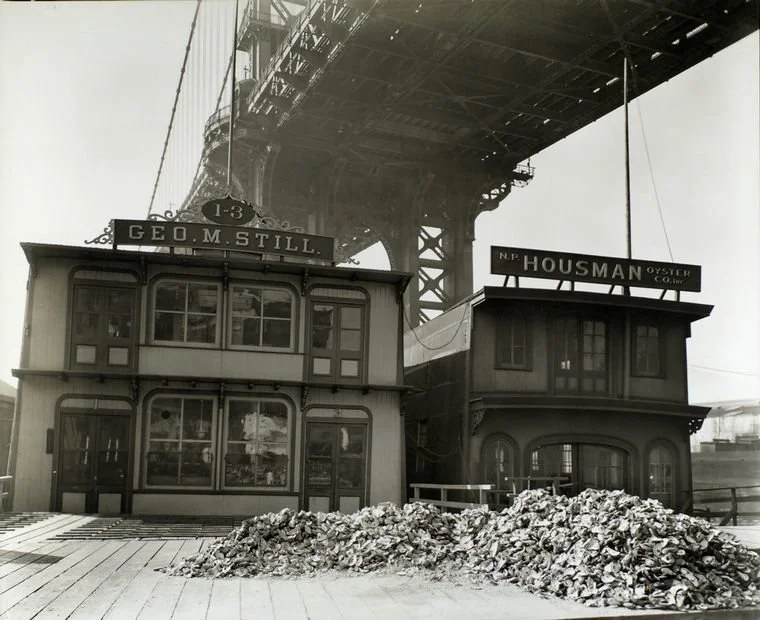
Oyster houses on South Street in lower Manhattan.
LOCATIONNew York, NY
PROJECT SCOPEBrand Strategy Workshop
Competitive Review + SWOT
Brand Positioning + Attributes
Naming Exploration
COLLABORATOR Onethread Design
THE OPPORTUNITYAn oyster cellar, remade for the way New York eats now
New York is thick with places to eat seafood and thicker still with places to drink beer. But the idea at the center of this project — a modern oyster cellar that married raw-bar heritage with the ease of a beer hall — had room to breathe, if it could be defined sharply enough to stand apart. We started by mapping the field: dozens of oyster bars, seafood halls, and beer halls plotted across a set of axes — seafood-focused versus pub, intimate versus communal, neighborhood versus destination — to find the open space this restaurant could genuinely own.
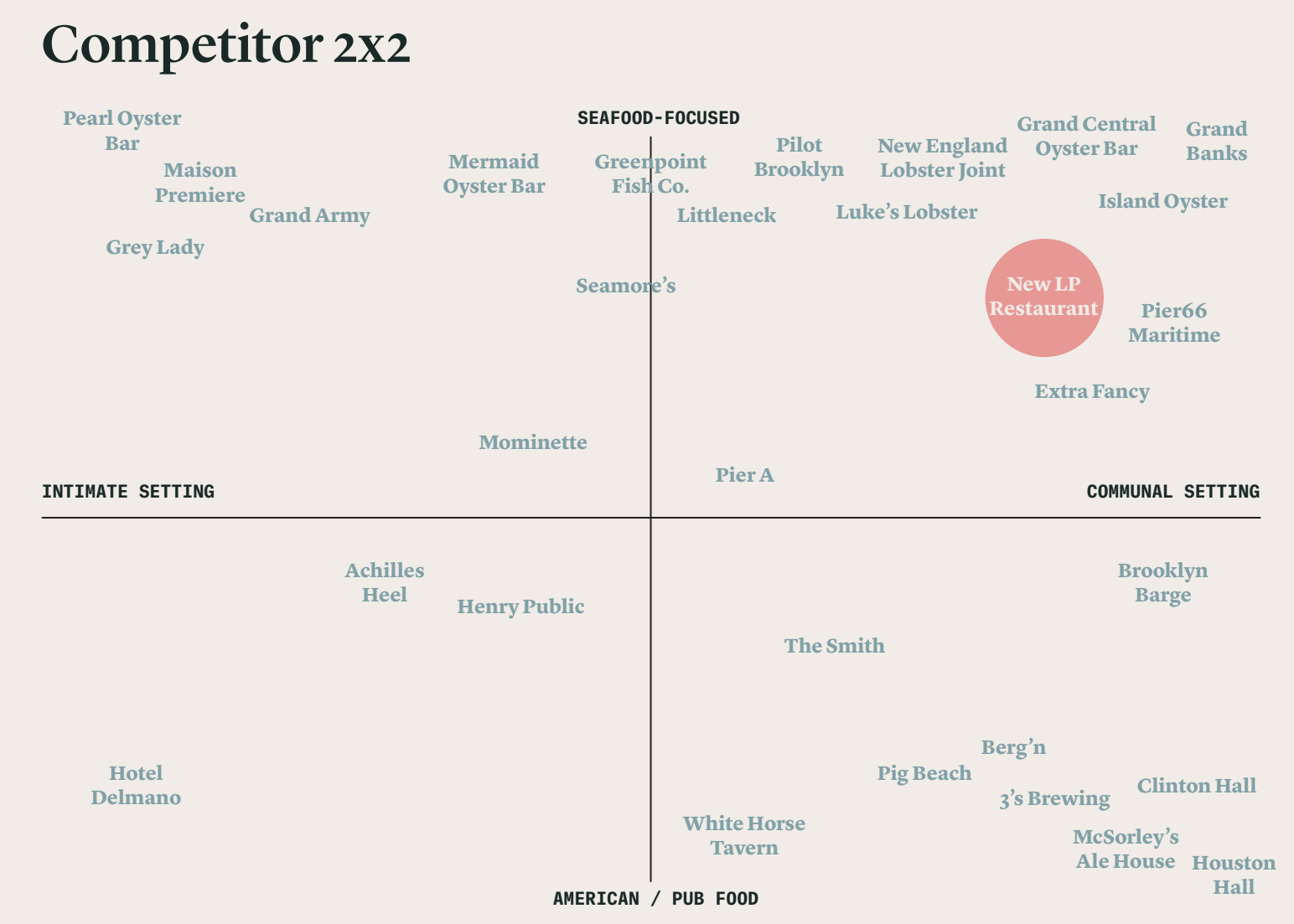
Competitive landscape map (2x2) with the new restaurant plotted against the field.
THE CHALLENGEStanding out in a market that eats new restaurants alive
The Lobster Place knew seafood cold. What was new was building a destination from the ground up, in a different setting than the Chelsea Market home they were known for, and doing it in a market that eats new restaurants alive. An honest SWOT named the stakes on both sides: deep expertise and a genuine sustainability commitment working in their favor; an unproven venue and a punishing New York market working against. The job wasn’t to paper over that — it was to build an identity strong enough to earn attention on day one.
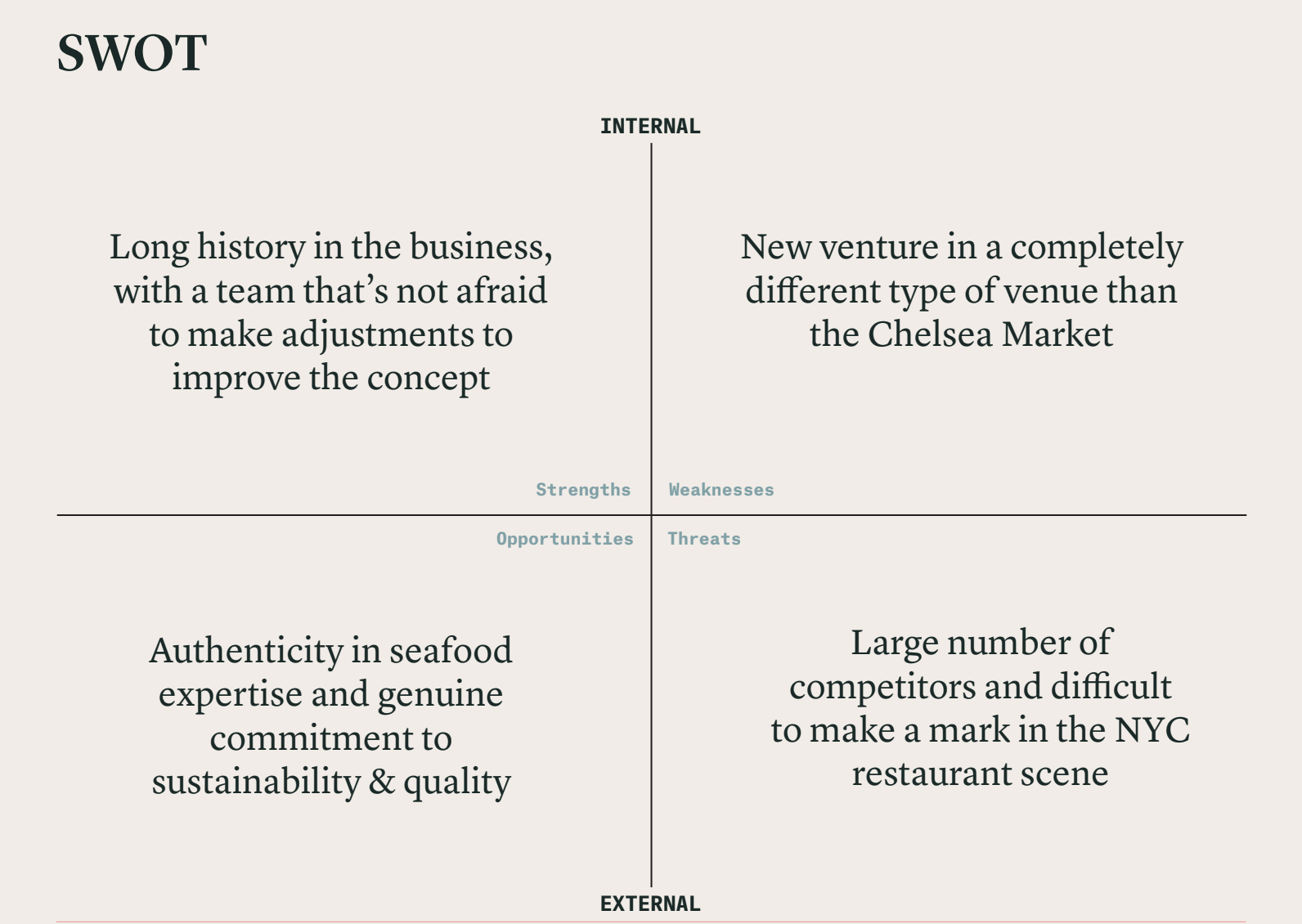
SWOT analysis for the new Lobster Place restaurant concept.
THE PROCESSWe defined the place before we named it
We ran a half-day working session with the leadership team, because a name is only ever as good as the thinking underneath it. We began by feeding back the team’s own language about the place they pictured — seafood that connects diners to the communities that grow it, a nod to the city’s lost oyster-cellar past, an atmosphere spirited and fun, a voice grounded in their heritage as fishmongers.
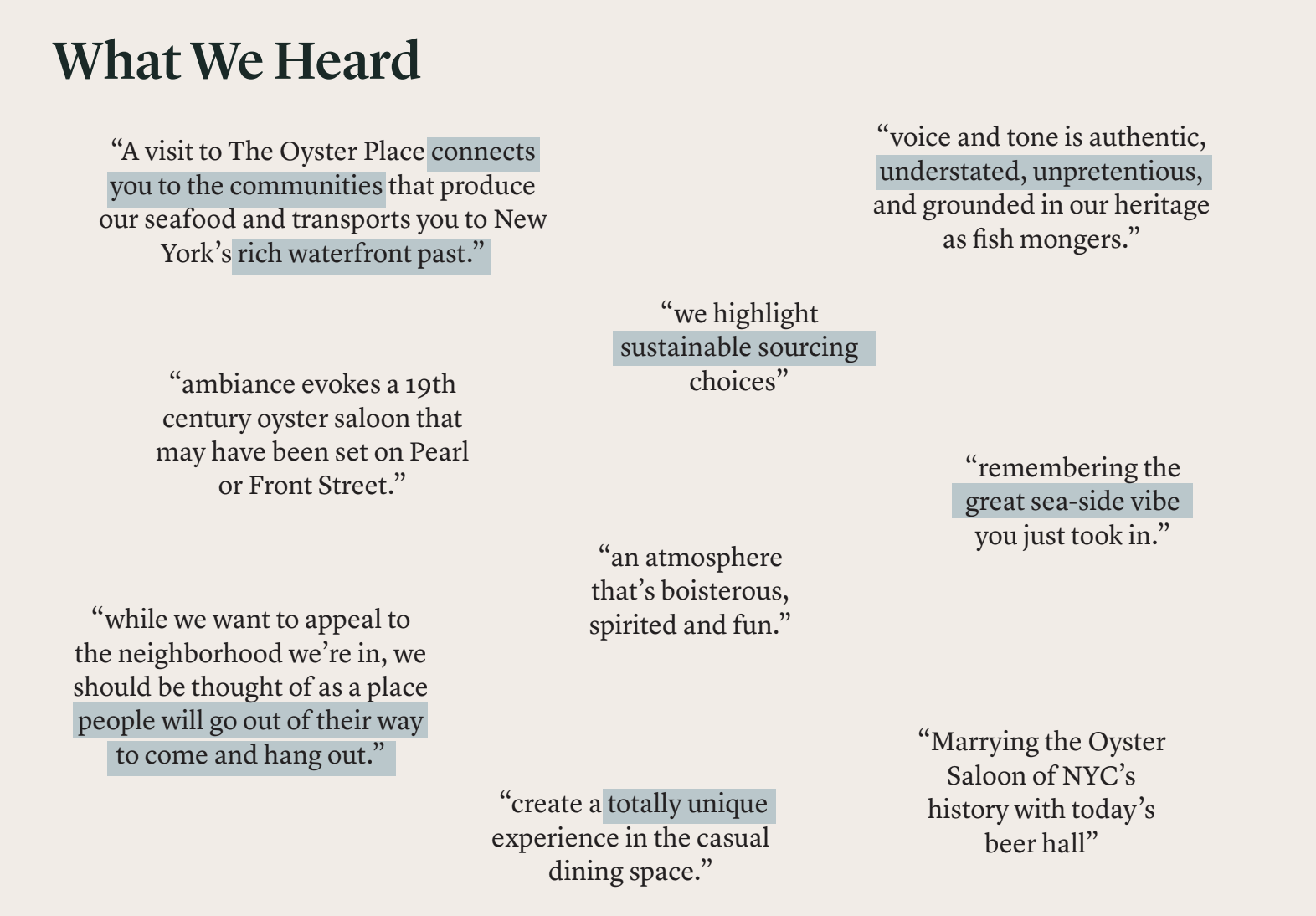
"What We Heard” collage slide capturing the client’s own language for the new restaurant.
Those opening questions weren’t idle — they came from an exercise we run to pin down a feel you can’t put in a spreadsheet. We slid the concept between poles until the room agreed where it sat: nautical and seaside or beer hall; salty or sweet; neighborhood favorite or out-of-your-way destination. It’s a fast way to turn a fuzzy “fun but not silly” into something a designer and a writer can actually build toward. Only then did we open the naming brainstorm — words before names, nothing off the table.
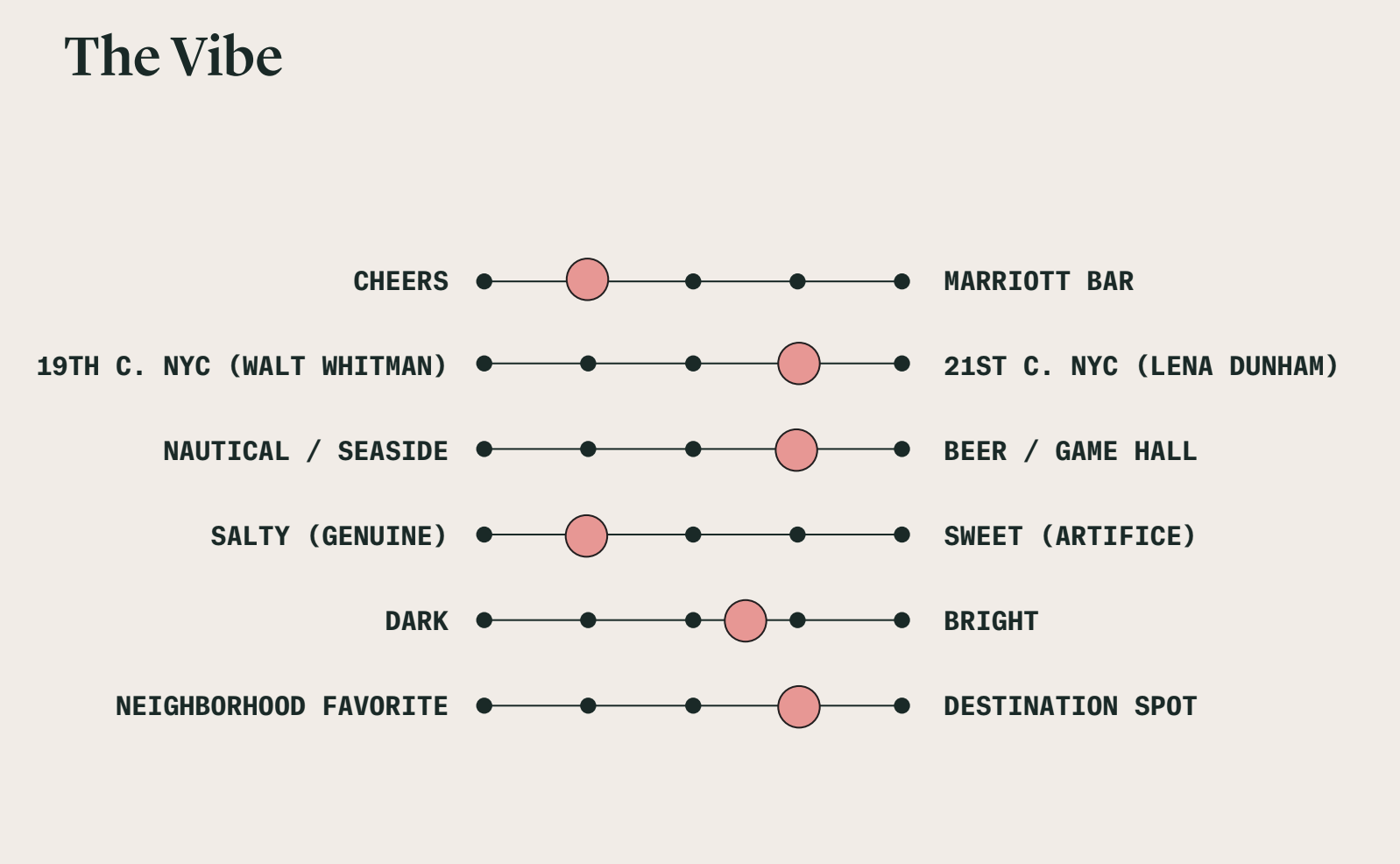
“The Vibe” spectrum exercise with the client’s selections.
“The exercise forced us to crystallize the vision for our project.”
— Ian MacGregor, CEO
THE CREATIVE WORKPositioning, brand attributes, and five naming directions
From the workshop we built the foundation. The positioning gave the team an elevator pitch anchored in the city’s own history — a New York “once brimming with oysters, whose streets were lined with their opalescent shells” — reframing the restaurant as an oyster cellar remade for now. We narrowed a long list of descriptors into five brand attributes, each with a one-line manifesto a designer could feel: Welcoming, Genuine, Spirited, Trustworthy, and Exceptional — because, as we put it, seafood doesn’t have to be serious to be taken seriously.
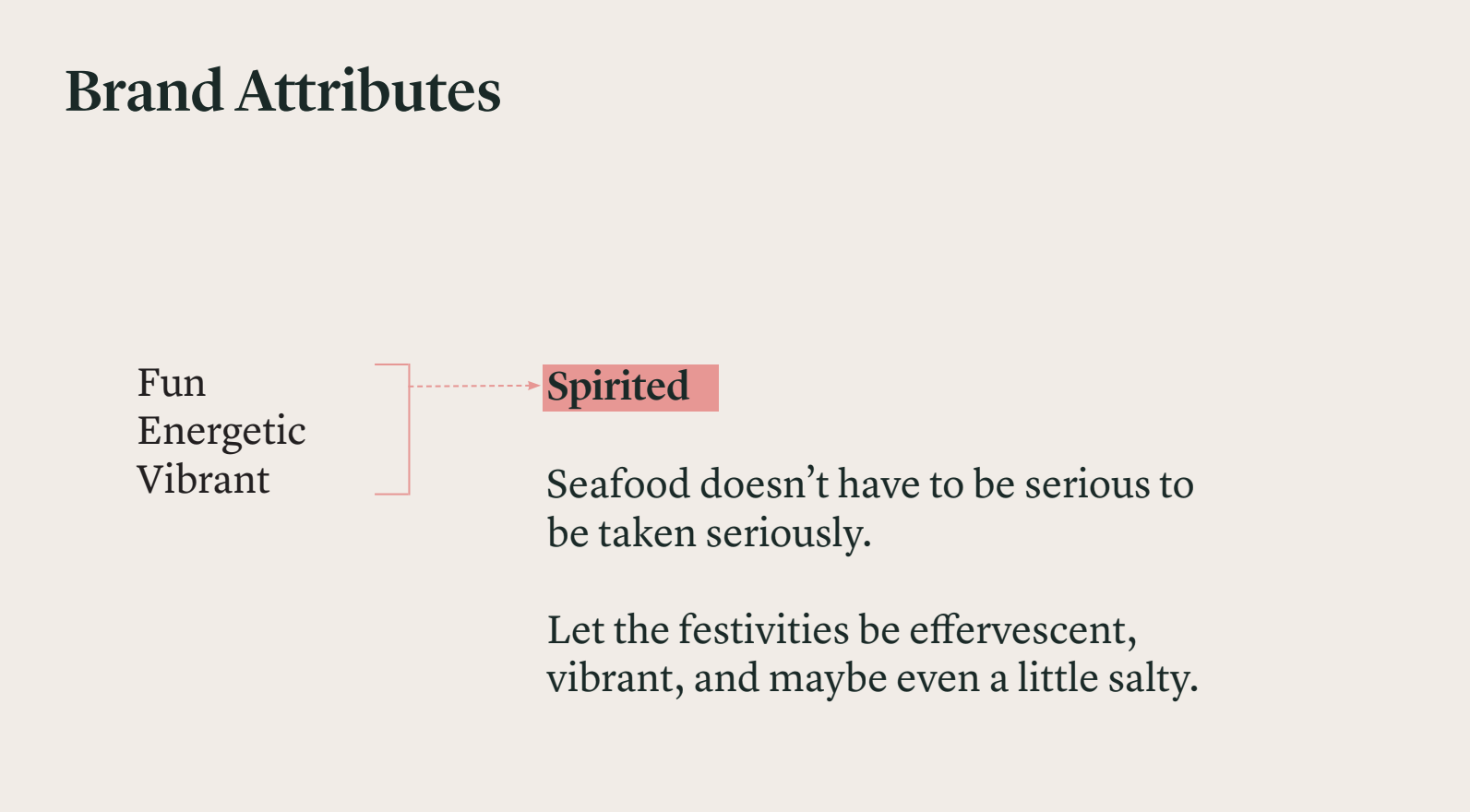
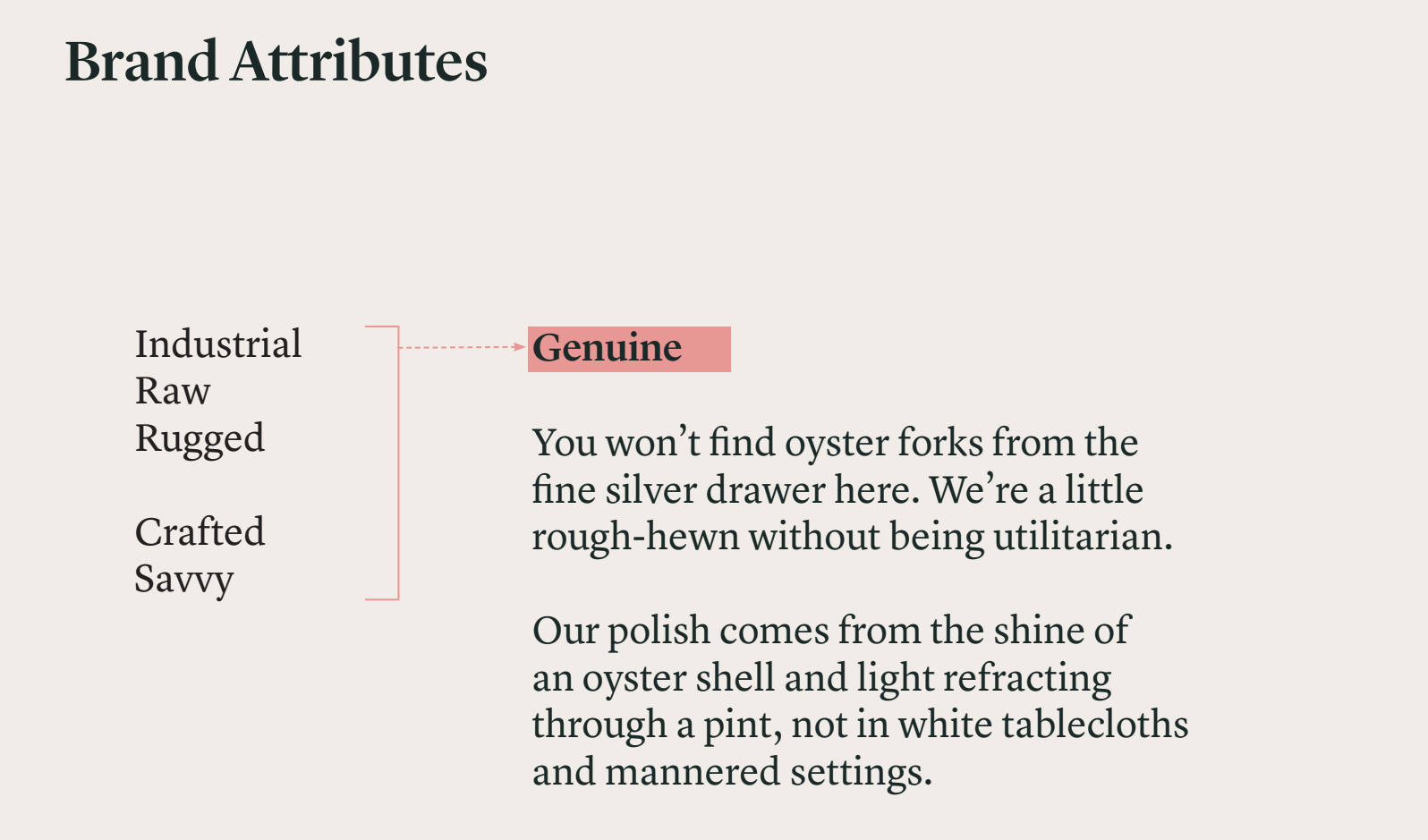
Two of the five final brand attributes and their descriptions.
Then the names. We came in with five distinct directions, each a different bet on what the name should do:
literal seafood and oyster references
New York places with a story to tell
the names of historic boats
puns and idioms
lyrical riffs on the briny and the salty
Then we made choosing genuinely fun. We ran an elimination round as a group, dropped the survivors into a mock press blurb to hear how each would actually read in the wild, and voted for a top five. The winning direction — New York places — carried into a second round, where we developed the strongest names across real formats and taglines before the founders made the call.
Underneath all five ran one strategic question — whether the name should tell people what you are or become what you make it — and we closed by giving them what a decision actually needs: their must-haves and nice-to-haves in writing, and a clear read on what each direction would ask of the brand.
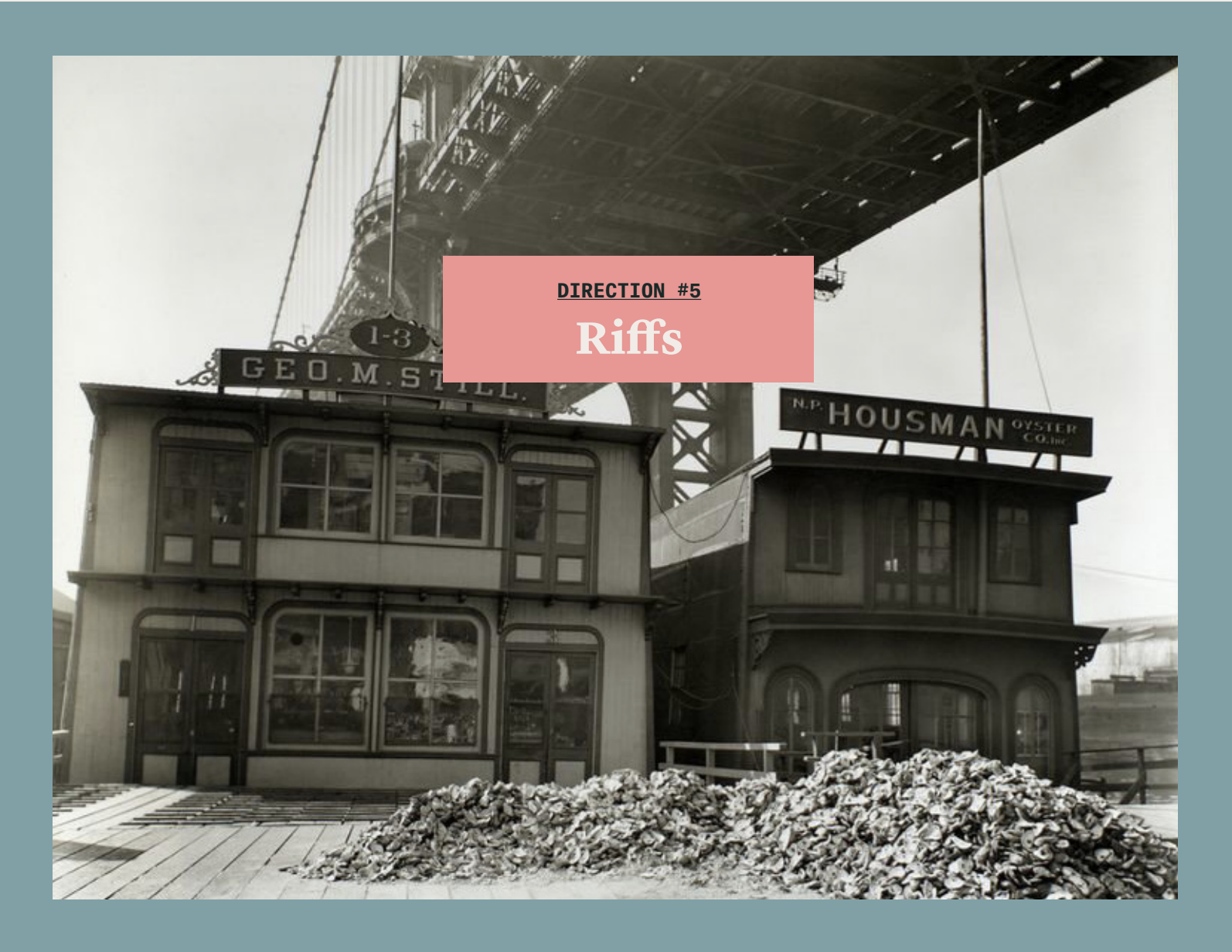
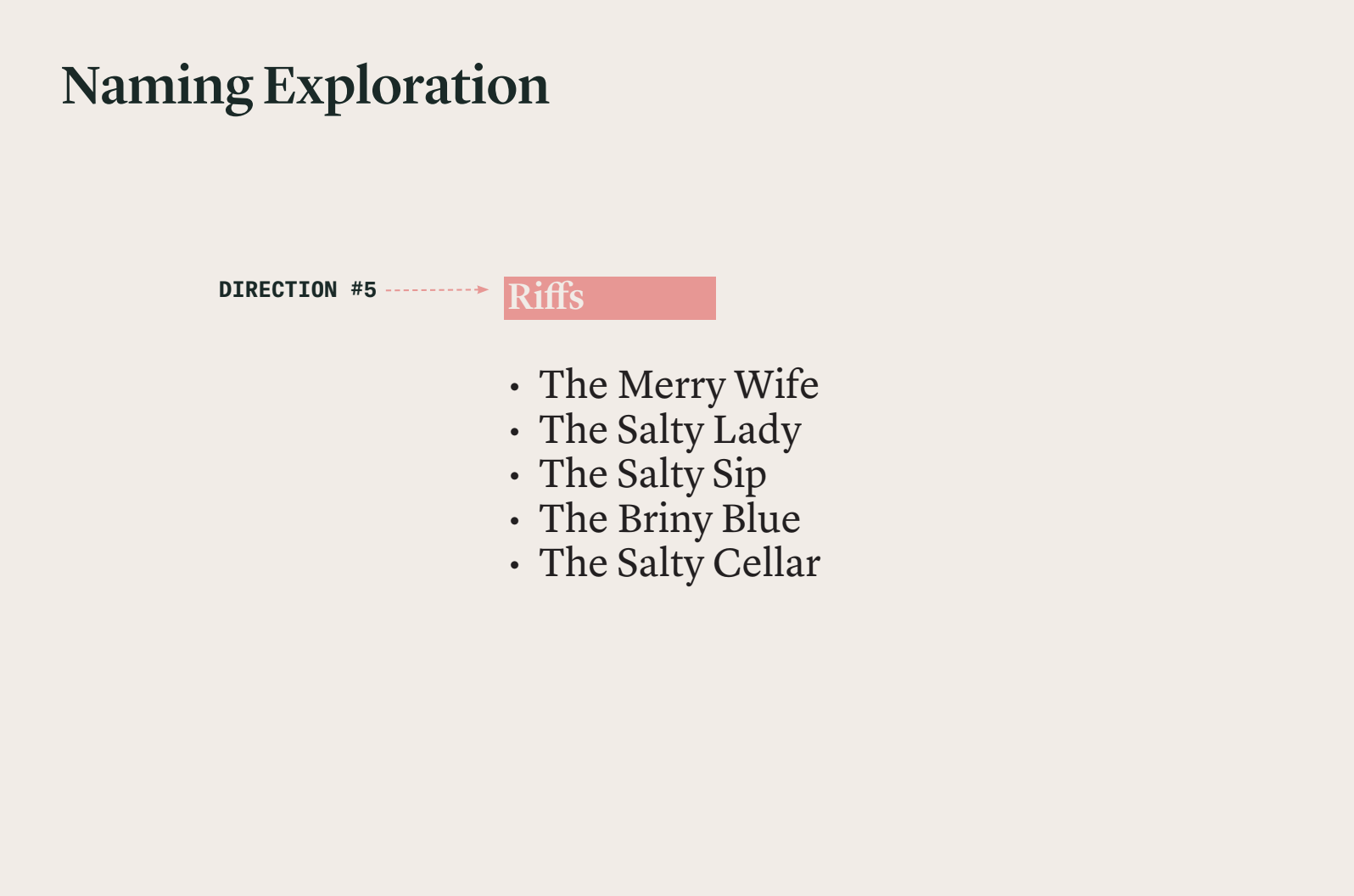
A few of the initial naming explorations for the new restaurant
THE OUTCOMEThe work proved its power where it counts
On the strength of the brand and naming work, The Lobster Place secured backing and a prime New York location. Then Covid arrived, plans were shelved, and the restaurant hasn’t opened — yet. But the work proved its power where it counts: it turned an idea into something people were ready to invest in and build.
Brand strategy is what turns an idea into something worth building — and worth backing.
FROM THE CLIENT“Working with Constellation Collective was a transformative process. We were focused on naming – and we came up with a great one…but more importantly, the exercise forced us to crystallize the vision for our project, and gave us a clearer understanding of our aspirations for the soul of our restaurant.”
— Ian MacGregor, CEO, The Lobster Place